Burnout Is a Biological Event: What Three Collapsing Systems Tell Us About Chronic Stress

For decades, American medicine treated burnout as a psychological inconvenience—a condition best managed with a vacation, a therapist, and perhaps a revised work schedule. That framing has proven not only inadequate but clinically dangerous. A growing body of research now positions burnout as a multi-system physiological breakdown, one that leaves measurable fingerprints across the cardiovascular, metabolic, and cognitive architecture of the human body. When practitioners continue to evaluate it solely through a behavioral lens, they risk missing the biological deterioration already underway.
The distinction matters enormously. Patients who present with exhaustion, emotional detachment, and declining performance are not demonstrating weakness of character. They are exhibiting signs of a body that has been running on stress hormones long past the point of sustainable compensation.
The Stress Hormone Cascade: Where the Damage Begins
Chronic stress activates the hypothalamic-pituitary-adrenal (HPA) axis, triggering sustained elevations in cortisol and catecholamines. In the short term, this response is adaptive—it sharpens focus, mobilizes energy, and prepares the body for threat. In the long term, however, the same hormones that protect the body begin to erode it.
Elevated cortisol suppresses immune function, disrupts glucose regulation, and impairs the hippocampus—the brain region central to memory consolidation and emotional regulation. Chronically high catecholamines keep the cardiovascular system in a state of persistent arousal, elevating resting heart rate, increasing arterial stiffness, and raising blood pressure in ways that standard annual checkups frequently fail to contextualize within the patient's lived experience.
This is the first system under assault: the cardiovascular system. Yet because individual readings may fall within technically normal ranges, the cumulative burden of stress-driven cardiovascular strain often goes unrecognized until it crosses into frank pathology.
Metabolic Dysregulation: The Hidden Cost of Running on Cortisol
The metabolic consequences of burnout are equally insidious. Sustained cortisol elevation promotes insulin resistance, stimulates visceral fat accumulation, and disrupts the hormonal signaling that governs appetite and energy expenditure. Patients experiencing burnout frequently report persistent fatigue, difficulty losing weight despite reasonable effort, and erratic energy levels throughout the day—symptoms that are biochemically coherent, not psychosomatic.
Mitochondrial function is also implicated. Emerging research suggests that chronic psychosocial stress impairs mitochondrial efficiency, reducing cellular energy output and contributing to the profound exhaustion that defines burnout at its most severe. When the body's primary energy-generating infrastructure is compromised, no amount of motivational reframing will restore functional capacity.
Clinicians who order a standard metabolic panel in a burned-out patient may see results that appear unremarkable. But fasting glucose, lipid panels, and thyroid markers taken in isolation do not capture the dynamic metabolic dysregulation that stress physiology produces. More comprehensive evaluation—including fasting insulin, cortisol rhythms, and inflammatory markers such as high-sensitivity C-reactive protein—begins to reveal a more accurate clinical picture.
Cognitive Deterioration: When the Brain Stops Compensating
The third system to suffer is the one patients notice most acutely: cognitive performance. Difficulty concentrating, impaired decision-making, memory lapses, and emotional blunting are not signs of laziness or disengagement. They are the neurological consequences of a brain that has been marinating in stress hormones for months or years.
Chronic cortisol exposure reduces gray matter volume in the prefrontal cortex—the seat of executive function—and promotes structural changes in the amygdala that amplify threat perception. The result is a brain that is simultaneously less capable of complex reasoning and more reactive to perceived stressors. This creates a self-reinforcing loop: the burned-out patient struggles to perform, perceives that struggle as further evidence of failure, and generates additional stress that deepens the physiological damage.
Functional cognitive assessment in these patients often reveals deficits in processing speed, working memory, and sustained attention that are disproportionate to their age and baseline capability. These are not psychiatric symptoms in the traditional sense; they are neurological sequelae of a prolonged biological stress response.
Why the Mental Health Framework Alone Is Insufficient
None of this is to minimize the psychological dimensions of burnout. Depression, anxiety, and occupational disengagement are real and serious components of the burnout experience, and mental health support remains an essential part of recovery. The problem arises when the psychological framework is applied exclusively, leaving the biological substrate unaddressed.
A patient who receives cognitive behavioral therapy for burnout-related depression but whose cortisol dysregulation, insulin resistance, and cardiovascular strain go unmeasured and unmanaged is receiving incomplete care. The psychological intervention may provide temporary relief, but the physiological drivers of their condition continue to compound.
This is the clinical gap that a systems-level approach to burnout is designed to close.
Identifying Systemic Burnout Before Collapse
Practitioners can begin to reframe burnout assessment by expanding the clinical conversation. When a patient presents with persistent fatigue, cognitive fog, emotional exhaustion, or declining physical performance, the evaluation should extend beyond mood screens and sleep hygiene checklists.
Key clinical considerations include:
-
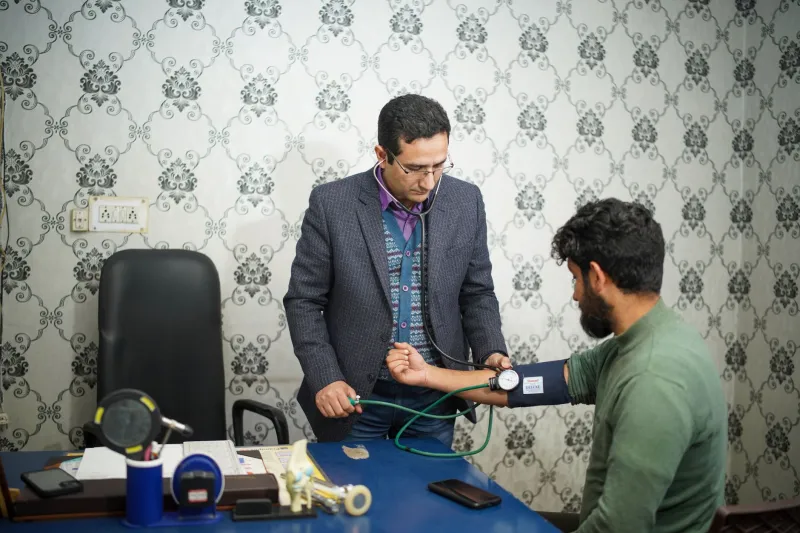
Cardiovascular monitoring: Resting heart rate variability (HRV) is a particularly sensitive marker of autonomic nervous system dysregulation and has been shown to decline measurably in individuals experiencing chronic occupational stress. Blood pressure trends over time—not just single-visit readings—provide additional context.
-
Metabolic profiling: Fasting insulin alongside glucose, cortisol morning levels, DHEA-S as a counter-regulatory marker, and inflammatory biomarkers offer a more complete metabolic portrait than standard panels alone.
-
Cognitive benchmarking: Brief validated assessments of processing speed and executive function, administered longitudinally, can detect deterioration that patients may be masking through compensatory effort.
Taken together, these data points allow the clinician to map the biological terrain of burnout rather than simply documenting its emotional surface.
Intervention at the Systemic Level
Effective intervention mirrors the multi-system nature of the condition. Lifestyle prescriptions targeting sleep architecture, structured aerobic exercise, and anti-inflammatory nutrition address the physiological drivers simultaneously. Sleep, in particular, is not simply a comfort measure—it is the primary window during which cortisol is cleared, neural repair occurs, and metabolic homeostasis is restored. Patients who are not achieving adequate slow-wave and REM sleep are physiologically incapable of recovering from burnout regardless of other interventions.
Pharmacological support may be appropriate in selected cases, particularly where HPA axis dysregulation is severe or where comorbid depression requires treatment. However, medication should be understood as a component of a broader systemic strategy, not a substitute for addressing the biological cascade at its source.
Patient education is also critical. When individuals understand that their burnout is a physiological event—not a reflection of personal inadequacy—they engage more effectively with treatment, maintain better adherence, and are less likely to return to the conditions that produced the breakdown in the first place.
A Clinical Reframing Long Overdue
The American workforce is experiencing burnout at rates that represent a genuine public health concern. Healthcare workers, educators, caregivers, and professionals across virtually every sector are presenting with symptoms that the existing clinical infrastructure is poorly equipped to evaluate comprehensively.
Reframing burnout as a biological condition—one that demands the same rigorous, multi-system clinical attention as any other chronic disease—is not merely an academic exercise. It is a practical imperative. The physiological consequences of untreated burnout include increased cardiovascular risk, metabolic disease progression, immune suppression, and accelerated cognitive aging. These are not hypothetical outcomes. They are the documented endpoints of a process that begins long before the patient reaches crisis.
Medicine's most powerful intervention is early, accurate measurement. For burnout, that measurement must extend across every system the condition touches.