Measuring the Whole Athlete: How Concurrent Strength, Aerobic, and Cognitive Load Testing Is Redefining What Fitness Actually Means
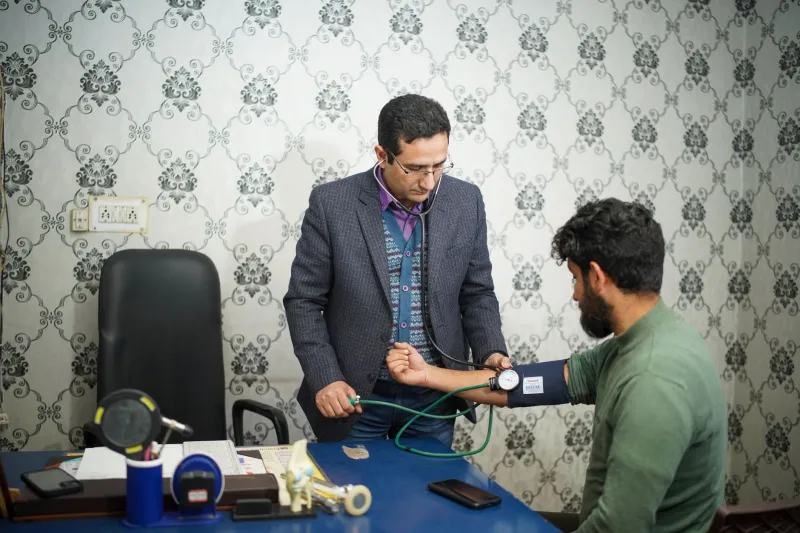
For decades, the standard approach to fitness evaluation in clinical and athletic settings has followed a familiar script: measure grip strength here, run a VO2 max protocol there, administer a cognitive screen somewhere else entirely—and then attempt to assemble a coherent picture of a patient's functional health from a collection of disconnected data points. The assumption embedded in this model is that the body's systems operate independently enough that isolating them produces meaningful insight.
That assumption is increasingly difficult to defend.
A growing body of research in exercise physiology, sports medicine, and cognitive neuroscience is demonstrating that muscular output, cardiovascular efficiency, and mental acuity are not merely correlated—they are dynamically interdependent systems that influence one another in real time, particularly under physical stress. Evaluating them separately may be procedurally convenient, but it leaves clinicians with an incomplete—and potentially misleading—map of a patient's true functional capacity.
The Limits of Single-System Fitness Testing
Conventional fitness protocols were designed with a specific purpose: to isolate a variable so it can be measured cleanly. A treadmill stress test tells you how the cardiovascular system responds to graded aerobic demand. A one-repetition maximum test quantifies peak muscular force. A standardized cognitive battery assesses processing speed, working memory, or executive function under resting conditions.
Each of these tools has genuine clinical value. The problem is not what they measure—it is what they omit.
Consider a 58-year-old patient preparing to return to recreational tennis after a cardiac event. A cardiologist clears her based on a submaximal stress test. A physical therapist documents adequate lower-extremity strength. A neuropsychologist finds no significant cognitive impairment. On paper, she appears ready. But none of those evaluations captured how her decision-making speed degrades when her heart rate climbs above 140 beats per minute, or how her reaction time on the court—a function of both aerobic state and cognitive load—differs meaningfully from her resting baseline.
This is not a hypothetical edge case. It is a structural gap in the way conventional fitness assessment is designed.
What Simultaneous Assessment Reveals
Integrated testing protocols—those that deliberately impose cognitive demands during active physical exertion—operate on a fundamentally different premise. Rather than measuring each system at rest or in isolation, they capture how the systems behave when they are competing for the same physiological resources.
The underlying mechanism is well-documented. During sustained aerobic effort, the brain's prefrontal cortex—responsible for executive function, impulse control, and working memory—experiences reduced relative blood flow as the cardiovascular system prioritizes oxygen delivery to working muscles. This phenomenon, sometimes described as transient hypofrontality, means that a person's cognitive performance under physical load can diverge substantially from their resting cognitive baseline.
For athletes, this matters because sport-specific decisions—reading a defensive formation, processing a rapidly changing tactical environment, maintaining technical form under fatigue—occur precisely when the brain is most resource-constrained. For aging adults, it matters because falls and injury often occur not from pure strength deficits, but from the failure to process environmental information quickly enough while the musculoskeletal system is already under demand. For patients with chronic conditions such as heart failure, type 2 diabetes, or post-COVID fatigue syndromes, it matters because functional independence in daily life requires all three systems to perform adequately—simultaneously.
Clinical Architecture of a Three-Power Assessment
What does a genuinely integrated assessment look like in practice? The design principles are more important than any single protocol, and they center on three requirements: concurrent demand, real-time measurement, and system-level interpretation.
Concurrent demand means that cognitive tasks are administered while the patient is actively engaged in physical exertion—not before or after. Validated dual-task paradigms, for example, combine gait or cycling protocols with working memory challenges or reaction-time tasks, generating data on how performance in each domain shifts under combined load.
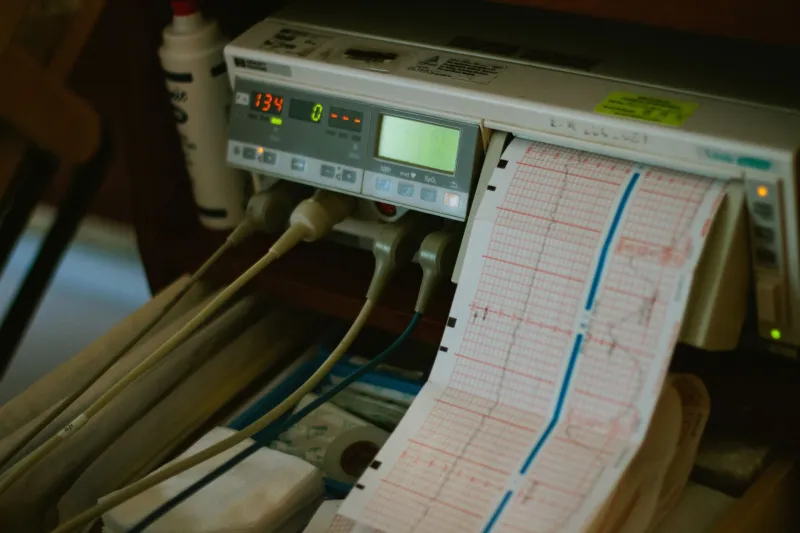
Real-time measurement requires instrumentation capable of capturing physiological signals—heart rate variability, oxygen saturation, electromyographic output—alongside behavioral performance metrics simultaneously, rather than sequentially. Wearable sensor arrays and portable cognitive testing platforms have made this logistically feasible in clinical settings that would have found it impractical a decade ago.
System-level interpretation is perhaps the most demanding requirement, because it asks clinicians to synthesize findings across domains rather than simply reporting each metric against its own normative range. A patient whose aerobic capacity falls within age-adjusted norms but whose cognitive performance degrades sharply at 70 percent of maximum heart rate presents a very different risk profile than one whose systems remain relatively stable under load—even if their resting scores look identical.
Who Stands to Gain Most
The populations for whom integrated assessment carries the greatest clinical relevance span a wide range of ages and conditions.
Competitive and recreational athletes benefit because the testing environment more closely mirrors the actual demands of their sport. Identifying the specific intensity threshold at which an athlete's decision-making begins to deteriorate allows strength and conditioning professionals to design training interventions that raise that threshold—a genuinely performance-relevant outcome that grip strength scores and VO2 max figures alone cannot produce.
Adults over 60 represent perhaps the most compelling use case from a public health standpoint. Falls remain a leading cause of injury-related mortality in the United States among this demographic, and the neuromuscular-cognitive interaction under physical demand is directly implicated in fall risk. Integrated assessment can identify patients who appear functionally adequate on isolated measures but demonstrate meaningful dual-task deficits—information that is directly actionable in fall-prevention programming.
Patients managing chronic disease—particularly those with cardiovascular diagnoses, metabolic syndrome, or neurological conditions—occupy a third high-priority category. For these individuals, the clinical question is rarely whether they can perform a given physical task or a given cognitive task in isolation. It is whether they can do both at once, reliably, across the range of demands that daily life imposes.
Translating Assessment Into Clinical Action
The value of any diagnostic framework is ultimately measured by whether it produces better decisions and better outcomes. Integrated fitness assessment is not an academic exercise—it is a tool for generating more precise, more individualized clinical guidance.
When a patient's concurrent testing reveals that cardiovascular strain is the primary driver of cognitive degradation under load, the intervention priority becomes aerobic conditioning. When the data show that strength deficits are the limiting factor—creating compensatory movement patterns that elevate heart rate and deplete cognitive resources—resistance training takes precedence. When cognitive resilience itself appears to be the constraining variable, dual-task training protocols can be incorporated directly into rehabilitation or performance programming.
This level of specificity is simply not available from assessments that measure each system in a vacuum.
A More Complete Picture of Functional Health
The shift toward concurrent, multi-system fitness assessment reflects a broader evolution in how clinicians and researchers are coming to understand human performance and resilience. The body is not a collection of independent subsystems that happen to share a skeleton. It is an integrated biological architecture in which cardiovascular, musculoskeletal, and neurological function are continuously negotiating shared resources—especially under the conditions of stress, exertion, and demand that define real-world performance.
Assessment frameworks that honor this reality will inevitably generate more clinically useful information than those that do not. For practitioners committed to delivering care grounded in the most complete possible understanding of each patient's functional status, the case for three-power, concurrent evaluation is both scientifically compelling and practically urgent.